USB PD 3.2 in 2026: What Charger Buyers Should Verify
USB-IF published USB Power Delivery Revision 3.2 Version 1.2 and a new compliance test specification in 2026. Here is what OEM charger buyers should verify before approving a product.
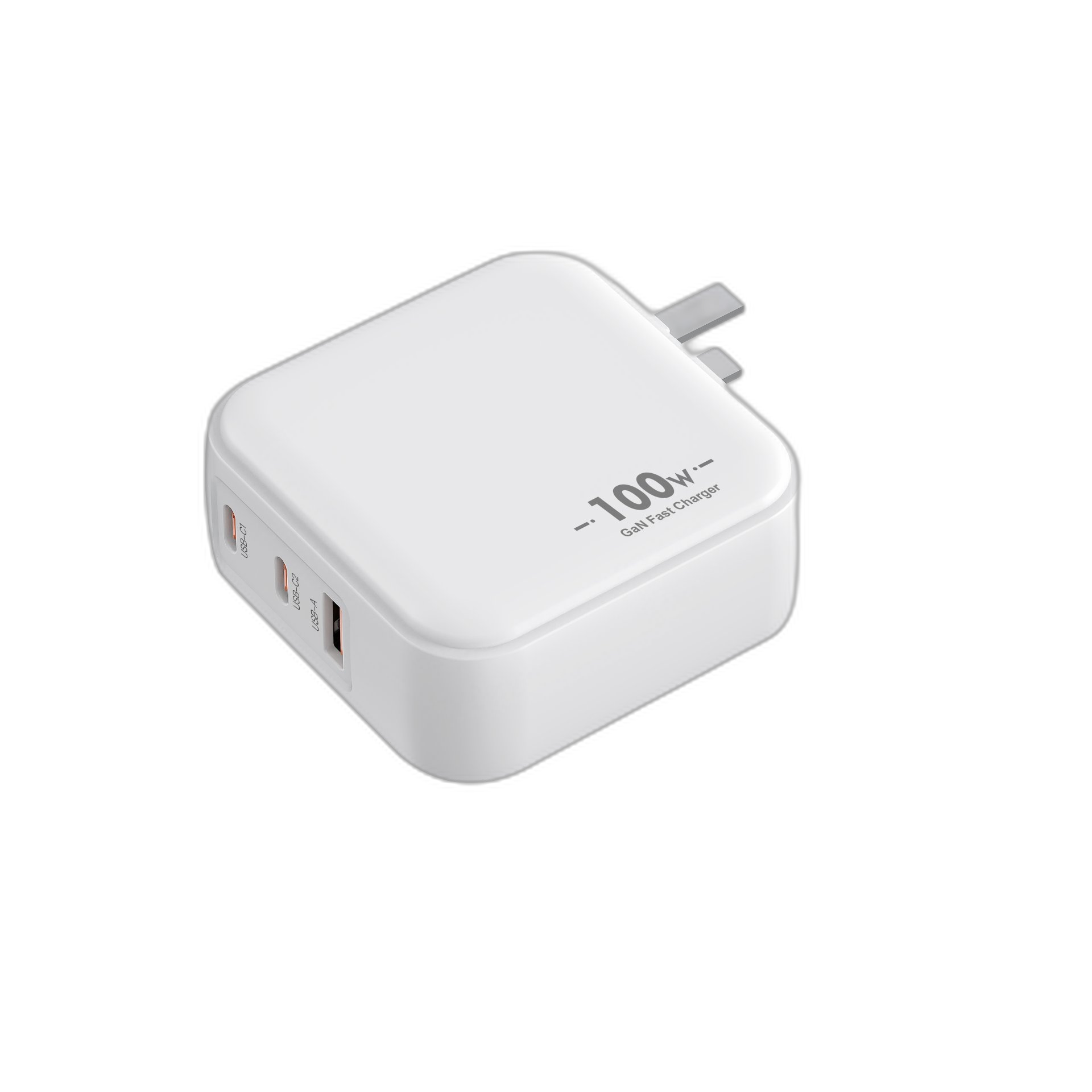
USB-C charger sourcing becomes risky when the connector name, charging protocol, wattage claim, cable capability, and test evidence are treated as the same thing. They are not. In 2026, USB-IF published USB Power Delivery Revision 3.2 Version 1.2 and a corresponding Q3 2026 compliance test specification, giving brands a useful checkpoint for new charger programs.
What the 2026 USB-IF Documents Tell Buyers
The official USB-IF document library lists USB Power Delivery Specification Revision 3.2 Version 1.2 with a release date of 20 May 2026. It also lists the USB PD Compliance Test Specification Q3 2026 dated 31 May 2026 and USB Type-C Cable and Connector Specification Release 2.5 dated 8 April 2026.
A newer specification does not automatically make an existing charger obsolete. The relevant requirements depend on the functions, power levels, protocols, cable, markets, and certification claims of the product being sold. Buyers should use the latest documents to confirm the design and test plan that apply to their exact SKU.
USB-C, USB Data, and USB PD Are Different Claims
USB Type-C describes the connector system. USB data specifications describe transfer speed. USB Power Delivery describes power negotiation. A product can use a USB-C connector without supporting every data speed or every USB PD feature. Product pages and packaging should state only the capabilities that were designed and verified.
Verify the Power Profile, Not Only the Maximum Wattage
A large number on the housing does not describe the complete charging behavior. Ask for the supported output voltages and currents, maximum single-port output, PPS support when claimed, and the power allocation for every simultaneous-port combination. A 100 W multi-port charger may redistribute power when a second device is connected, so the allocation matrix should match the intended laptop, tablet, and phone use cases.
Treat the Cable as Part of the Charging System
The cable can limit power delivery even when the adapter is capable of more. Confirm the cable power rating, E-marker requirement where applicable, connector temperature, voltage drop, length, and the exact cable included in the retail package. Test the charger and cable together with representative devices rather than approving them as unrelated components.
Freeze Firmware, BOM, and Evidence Together
USB PD behavior is affected by the controller, firmware, power stage, port configuration, and cable. Before mass production, record the firmware version and bill of materials linked to the approved samples and test reports. If a controller, firmware build, capacitor, transformer, connector, or cable changes, review whether regression testing or updated documentation is required.
Six Questions to Put in Your RFQ
- Which device categories and power profiles does the charger target?
- What is the single-port and simultaneous-port allocation table?
- Are PPS or other optional capabilities claimed and tested?
- What are the supplied cable's power rating, E-marker status, and length?
- Which model, BOM, and firmware version are covered by the test evidence?
- Is the product eligible to use any proposed USB-IF name or logo?
Turn the Specification into a Purchase Requirement
A useful RFQ connects technical claims to a target market, device list, port-use scenario, cable, label, firmware version, and test plan. Yuehang can review 30 W to 100 W GaN charger projects and prepare a model-specific configuration for OEM or ODM evaluation. Final certification and trademark eligibility should be confirmed for the exact product and sales market.